

Farmhouse Wall Decor Behind a Couch: Ideas for Your Living Room
The wall behind the couch is often one of the largest blank spaces in a living room—and one of the easiest places to make the room feel more finished.
With farmhouse style, the challenge isn't finding something to put there. It's choosing farmhouse wall decor behind a couch that adds character without making the room feel overly decorated or themed.
The best farmhouse living rooms tend to feel as though they've developed naturally over time. A vintage-inspired mirror, landscape painting, collection of framed botanicals, or simple wall shelf can provide the focal point you need while still allowing the furniture and textures in the room to do their part.
Here are some of our favorite ways to approach that space.
1. Hang One Oversized Piece of Artwork
You don't need to fill a large wall with lots of small decorations.
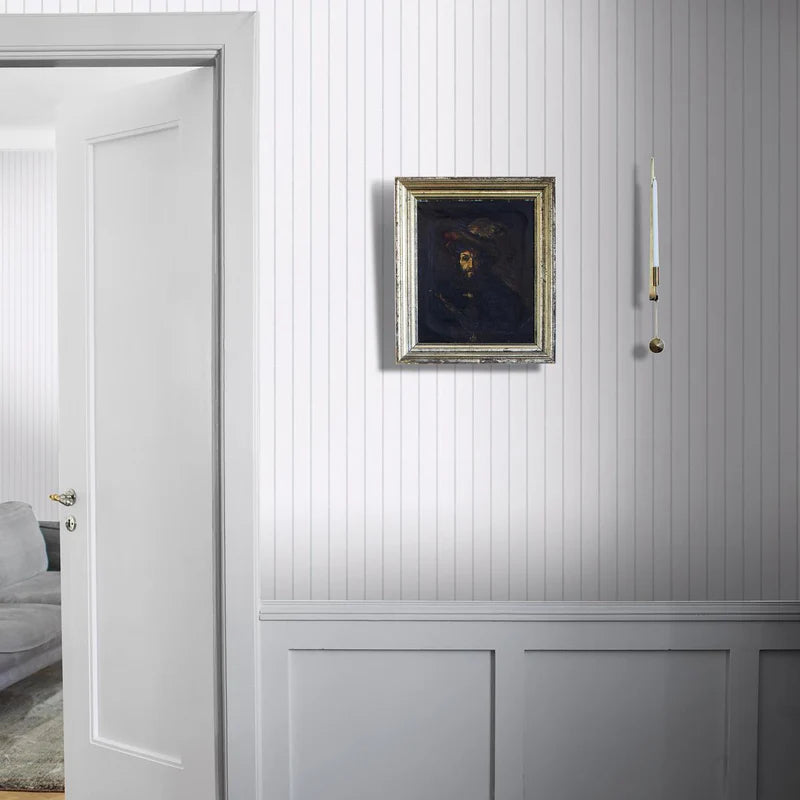
In fact, one substantial piece of artwork can be one of the simplest ways to decorate behind a farmhouse sofa. Landscapes, pastoral scenes, botanicals, still lifes, and vintage-inspired artwork all complement the relaxed character of farmhouse interiors.
Scale is important here. Artwork that is too small can look disconnected from a large couch. A wider piece—or a pair of coordinating pieces—helps visually connect the wall decor with the furniture below it.
For a more collected farmhouse look, consider artwork with an aged wood, antique gold, black, or subtly distressed frame rather than something that feels overly polished.
2. Use an Oversized Mirror
A large mirror is especially useful when the living room doesn't get much natural light.
Placed behind the couch, a mirror can reflect windows and light from other parts of the room while creating a strong focal point.
For farmhouse interiors, look beyond basic frameless mirrors. Wood frames, arched silhouettes, window-inspired designs, and aged metal finishes can add architectural character even to a relatively simple room.
An oversized mirror can also be a good choice if the rest of your living room already contains patterns or artwork and you don't want to introduce another competing visual element.
3. Create a Farmhouse Gallery Wall
A gallery wall gives you an opportunity to make the space more personal.
Rather than purchasing a perfectly coordinated set of prints, try combining pieces that look as though they could have been collected over time. Vintage landscapes, botanical illustrations, family photographs, sketches, small mirrors, and antique-inspired frames can all work together.
The trick is finding something that connects the pieces.
That might be a similar color palette, repeated wood tones, matching frame finishes, or artwork with a common subject.
And don't worry about making the arrangement perfectly symmetrical. A slightly less formal composition often feels more natural in a farmhouse living room.
4. Try Vintage Botanical or Floral Artwork
Botanical artwork is a natural fit for farmhouse interiors because it introduces color and a connection to the outdoors without requiring bold contemporary artwork.
Consider a series of botanical illustrations arranged in a grid, one oversized floral painting, or several mismatched vintage-inspired prints.
You can also use botanical artwork to bring subtle color into an otherwise neutral farmhouse living room. Muted greens, dusty blues, warm yellows, and soft earth tones pair particularly well with natural wood and neutral upholstery.
5. Bring in a Vintage Landscape
There is something about an old landscape painting that immediately makes a room feel more established.
Pastoral landscapes, countryside scenes, barns, fields, and understated nature paintings work particularly well as farmhouse living room wall decor.
They don't have to be actual antiques, either. Vintage-inspired artwork can create a similar effect when the colors, subject matter, and frame suit the rest of the room.
Try placing a landscape above a simple neutral couch and repeating one or two colors from the painting elsewhere in the room through pillows, throws, pottery, or other accessories.
6. Add Architectural Character
Not everything behind the couch has to be traditional framed artwork.
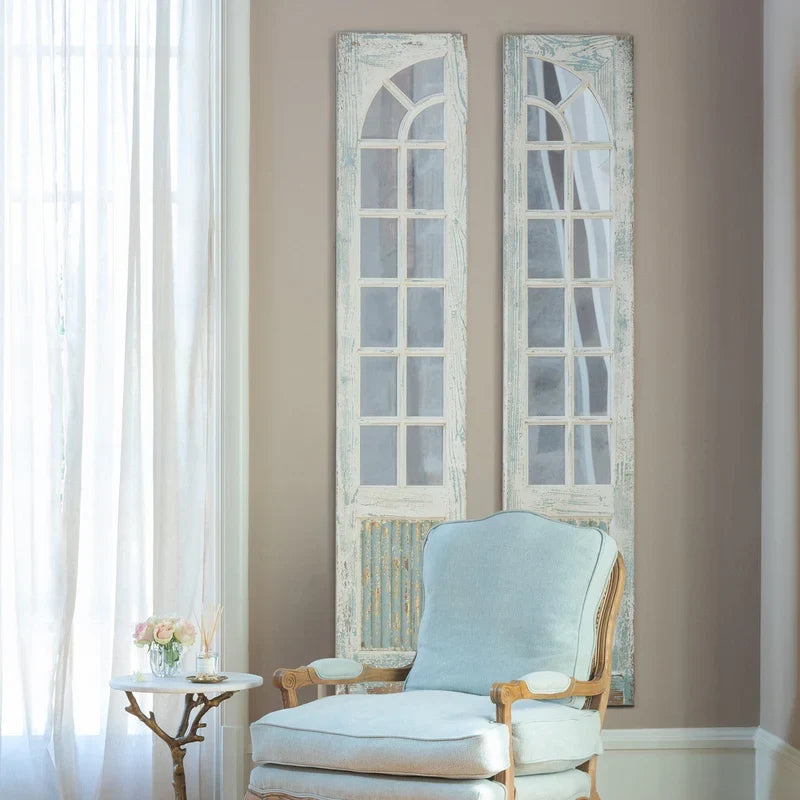
Architectural pieces can introduce texture and dimension to an otherwise flat wall. An antique-style window frame, carved wood panel, decorative wall panel, architectural fragment, or pair of vintage-inspired shutters can all work.
These pieces are particularly effective in rooms with lots of soft furnishings because they introduce a harder material and a different texture.
The important thing is restraint. One interesting architectural piece generally makes a stronger statement than covering the wall with several unrelated rustic objects.
7. Install a Picture Ledge
If you like changing your decor throughout the year, consider a picture ledge behind the sofa.
Instead of committing to one permanent arrangement, a ledge allows you to layer framed artwork, photographs, small mirrors, and other decorative pieces. You can swap individual items as your room changes or introduce subtle seasonal touches without rebuilding an entire gallery wall.
Vary the height of the pieces and allow some frames to overlap slightly. That layering helps create the casual, collected feeling that works so well with farmhouse decor.
Just make sure the ledge is securely installed and positioned high enough that someone sitting on the couch isn't likely to bump into it.
8. Use a Pair or Trio of Coordinating Pieces
Sometimes the dimensions of the couch make one piece of artwork difficult to get right.
A pair or trio can solve that problem.
Three botanical prints, two landscapes, a series of vintage sketches, or coordinating framed textiles can span more of the wall while creating a sense of rhythm.
Keep the spacing between pieces relatively consistent so they read visually as one larger arrangement rather than several unrelated decorations.
9. Mix Wood, Metal, and Natural Texture
Farmhouse style becomes much more interesting when the room isn't dominated by a single material.
If you have a wood coffee table, for example, you don't necessarily need another large piece of brown wood above the sofa. An aged metal mirror, framed textile, painted artwork, or lighter wood frame can create contrast.
Look at the entire living room rather than treating the wall behind the couch as an isolated decorating project.
Repeating materials that already appear elsewhere in the room—even in small amounts—is one of the easiest ways to make new wall decor feel like it belongs.
10. Don't Feel Like You Have to Fill the Entire Wall
One of the most common decorating mistakes is assuming that every inch of a large wall needs something on it.
It doesn't.
Negative space can actually make your farmhouse decor stand out more.
Instead of stretching a gallery wall from one side of the room to the other, concentrate the arrangement around the sofa. This visually anchors the seating area and prevents the wall from becoming the dominant feature of the room.
A farmhouse living room should ultimately feel comfortable and lived in—not like every available surface was decorated.
How High Should You Hang Wall Decor Above a Couch?
As a general starting point, leave approximately 6 to 10 inches between the top of the couch and the bottom of your wall decor.
The exact distance will depend on the height of the sofa, ceiling, artwork, and surrounding furniture, but you want the decor to feel visually connected to the couch.
Hanging artwork too high is a common mistake. When there is a large empty gap between the sofa and artwork, the two can look like completely separate elements.
How Big Should Wall Decor Be Behind a Couch?
For a single piece or grouped arrangement, aim for wall decor that is roughly two-thirds to three-quarters the width of the sofa as a starting point.
For example, a very small framed print centered above an 84-inch sofa will usually look undersized even if the artwork itself is beautiful.
That doesn't mean every arrangement needs to follow an exact formula. A gallery wall can be wider, while a tall architectural piece might intentionally be narrower. Think of proportion as a guide rather than a strict rule.
What Should You Avoid When Decorating Behind a Farmhouse Couch?
The biggest mistake is trying too hard to make the wall look "farmhouse."
You don't need a farmhouse sign, a barn picture, distressed shutters, a clock, a wreath, and a galvanized metal accessory all competing for attention.
Instead, choose pieces you would want in your home regardless of what decorating style they were labeled.
Natural materials, interesting textures, vintage-inspired artwork, mirrors, and objects with character can communicate farmhouse style much more subtly.
Creating a Farmhouse Living Room That Feels Collected
The best farmhouse wall decor behind a couch doesn't necessarily announce itself as farmhouse decor.
It simply feels right in the room.
Start with one element you genuinely like—a landscape painting, antique-inspired mirror, botanical print, or architectural piece—and build from there. Pay attention to scale, repeat a few materials or colors already present in your living room, and resist the temptation to fill every bit of empty space.
That approach creates something much closer to an authentic farmhouse interior: comfortable, personal, layered, and collected over time.



Leave a comment
This site is protected by hCaptcha and the hCaptcha Privacy Policy and Terms of Service apply.